Executive Briefing: The CTAIO Guide to AI Governance, ADLC & SDLC Frameworks
Controlling AI Cost Blowouts, Governing Autonomous Coding, and Scaling Elite Engineering Teams
Executive Summary
The rapid integration of AI coding agents (Claude Code, GitHub Copilot, Cursor, Kiro or Amazon Q Developer) has exposed a dangerous structural rift in enterprise IT. While raw code generation speed has increased dramatically, enterprise software delivery faces two critical threats: runaway AI operational expenses (token sprawl and compute blowouts) and uncontrolled developer output (low-quality, unverified code flooding repositories).
Conventional Agile management frameworks and 2-week sprint cadences were built to manage human developer velocity, not autonomous agentic output. Without structural governance, developer teams burn massive API budgets while producing architectural drift and technical debt.
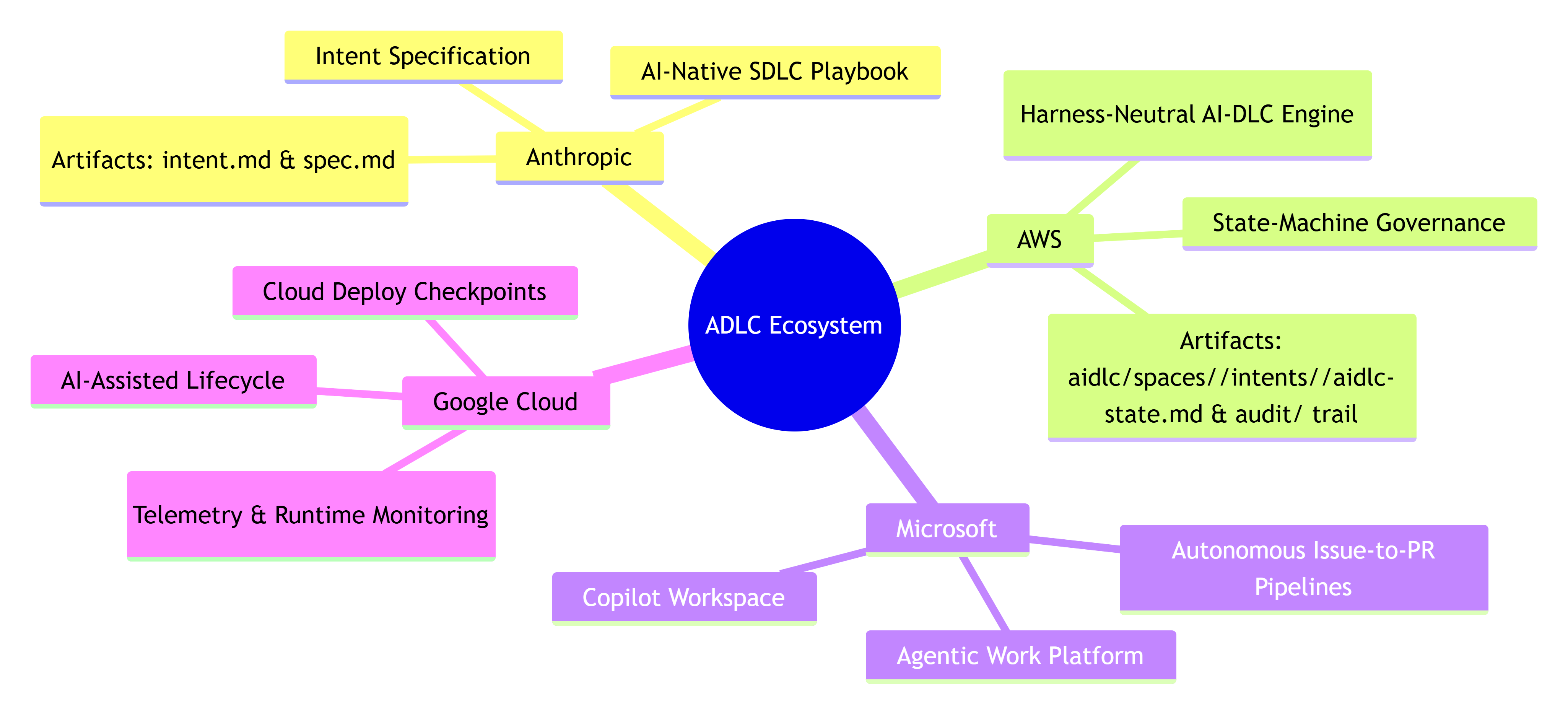
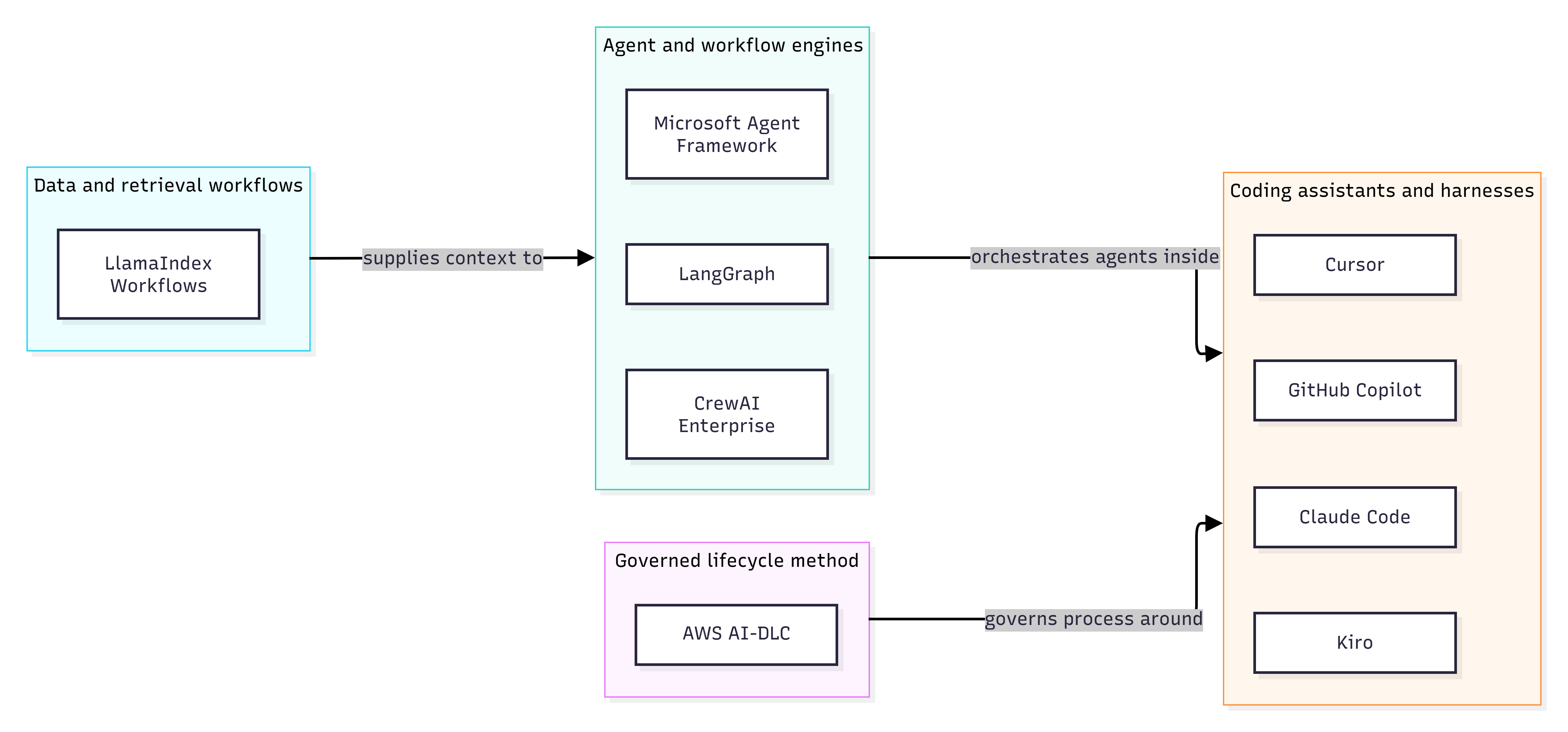
To solve this, enterprise leaders are adopting governance models like AWS’s open-sourced AI-Driven Development Life Cycle (AI-DLC / ADLC) (awslabs/aidlc-workflows) alongside multi-agent orchestrators like LangGraph, CrewAI Enterprise, Microsoft Agent Framework,, and LlamaIndex Workflows. These tools help turn ad-hoc AI usage into structured, auditable software delivery pipelines. Cost limits must be added separately through your harness, API gateway or orchestrator.
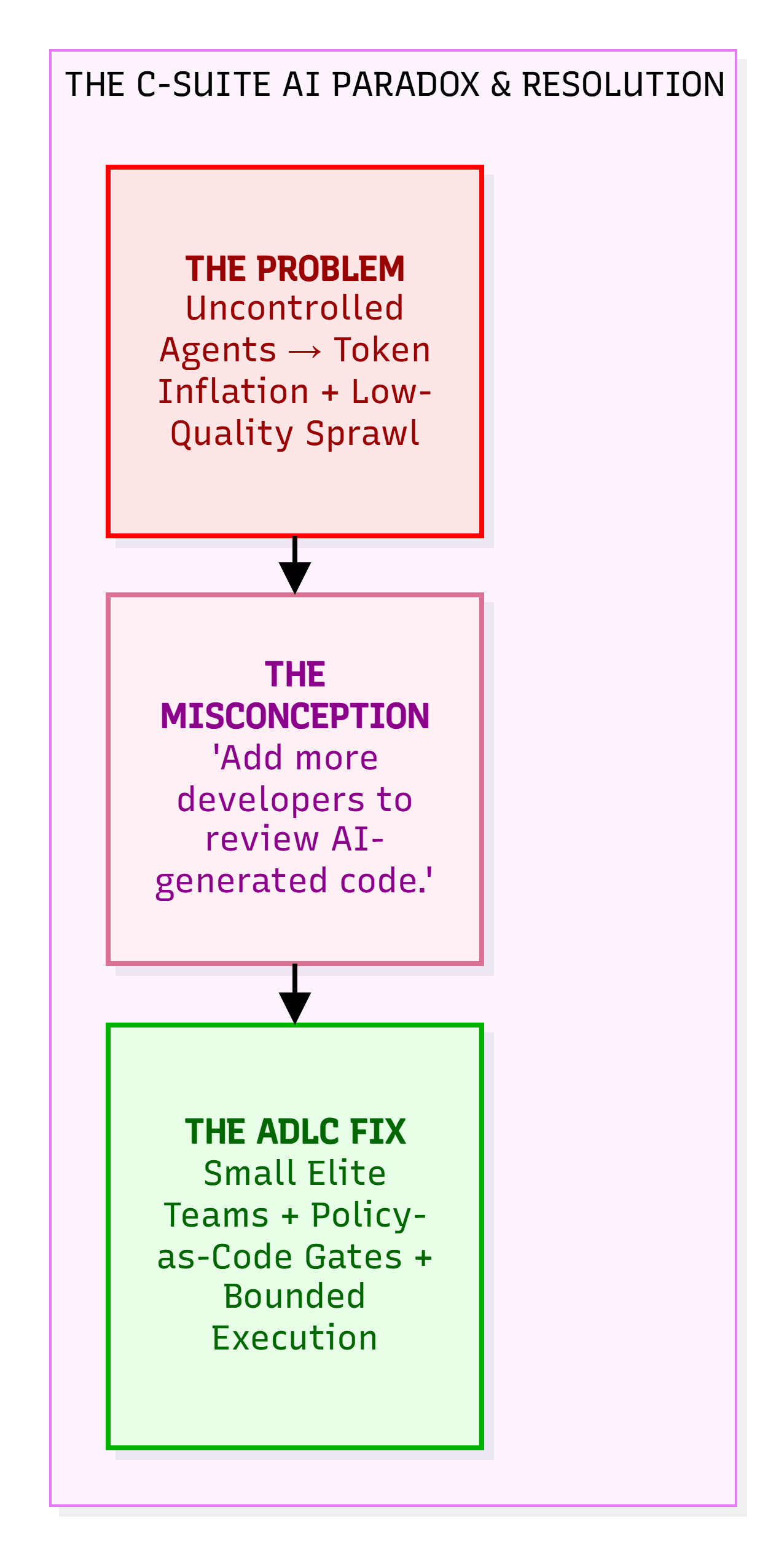
1. The C-Suite Challenge: Cost Blowouts, Developer Quality & The SDLC vs. ADLC Disconnect
The Disconnect: Why the ADLC Concept Isn't Sticking with the C-Suite
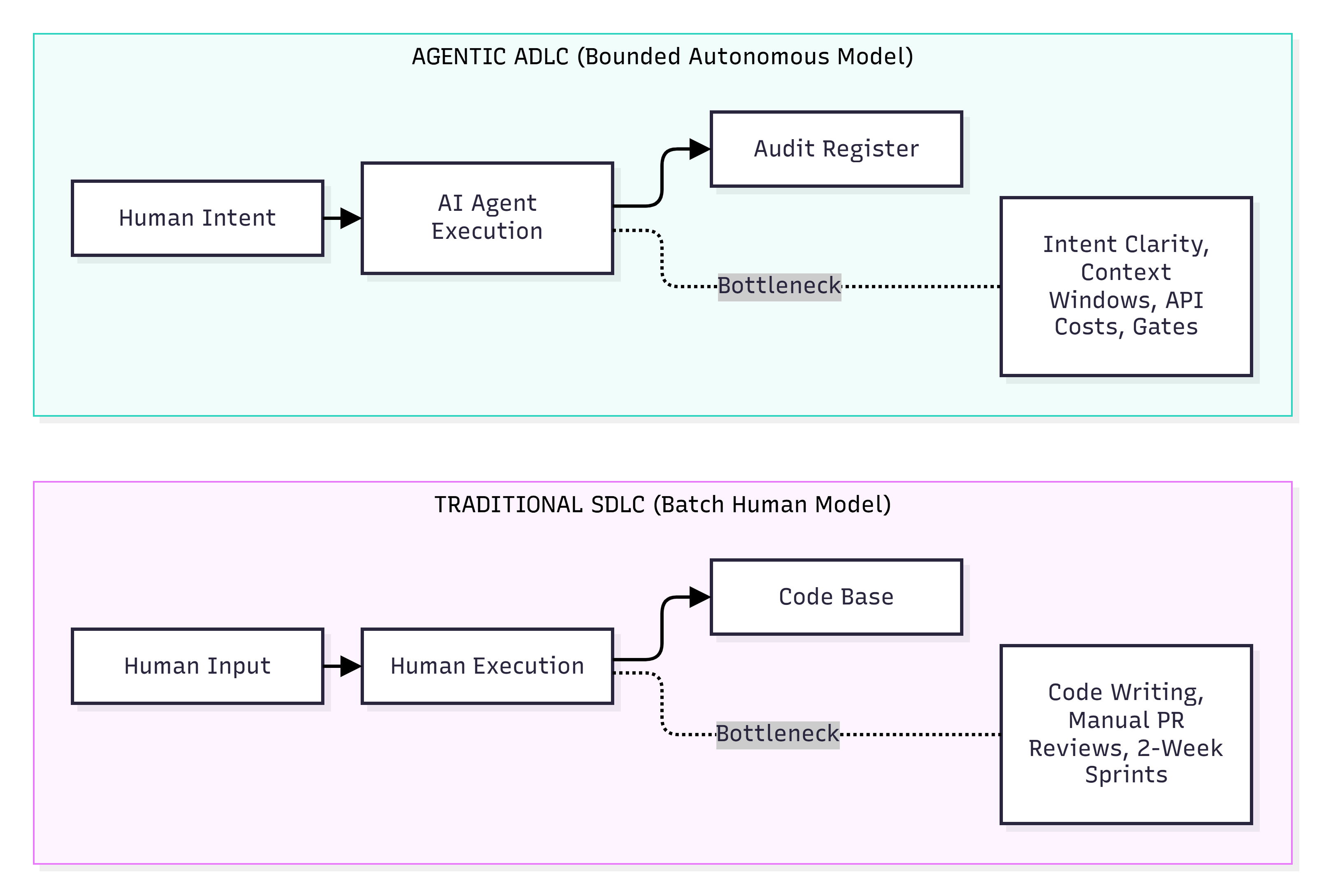
Major cloud and AI vendors (AWS most visibly, with AI-DLC) are pushing the transition from traditional Software Development Life Cycle (SDLC) to Agentic / AI-Driven Development Life Cycle (ADLC / AI-DLC). However, the concept often fails to stick with executive leadership due to a fundamental framing error:
- Vendors Sell Capability, Not Operating Models: Vendors market AI as a developer productivity tool to "type code faster." Executives, however, view SDLC as a deterministic management process designed for humans working in 2-week batch sprints.
- The Mental Model Shift: In traditional SDLC, human writing of code is the primary bottleneck. In ADLC, code generation approaches zero marginal cost. The new bottleneck shifts entirely to Intent Definition, Context Management, API Unit Economics, and Architectural Governance.
How Major Vendors Frame the ADLC Ecosystem
The Hidden Mechanics of AI Cost Inflation
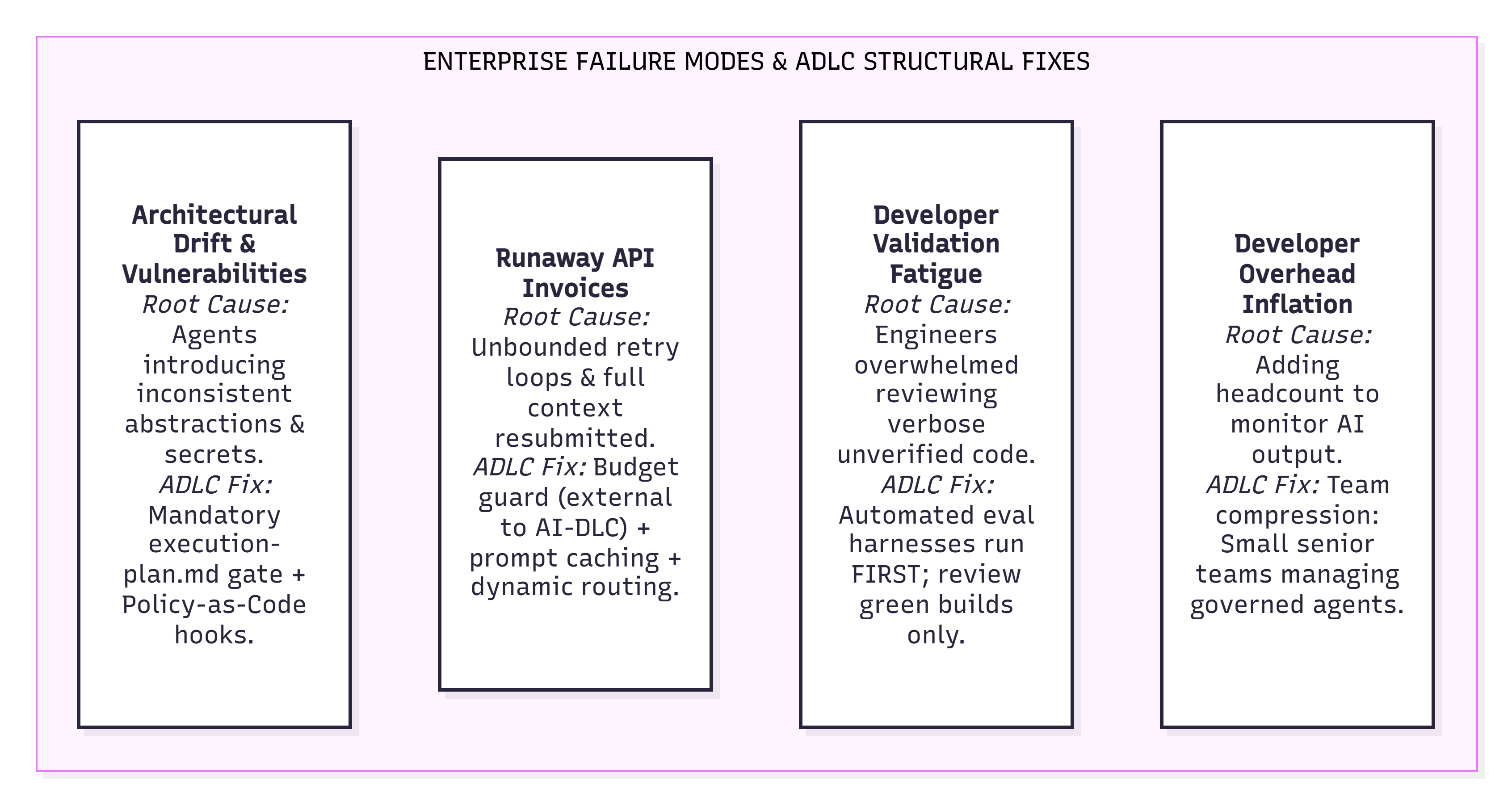
C-suite leaders are routinely blindsided by cloud and AI API invoices. Token consumption can grow much faster than team size when developers deploy unconstrained autonomous agents, because each retry and each long context is re-sent.
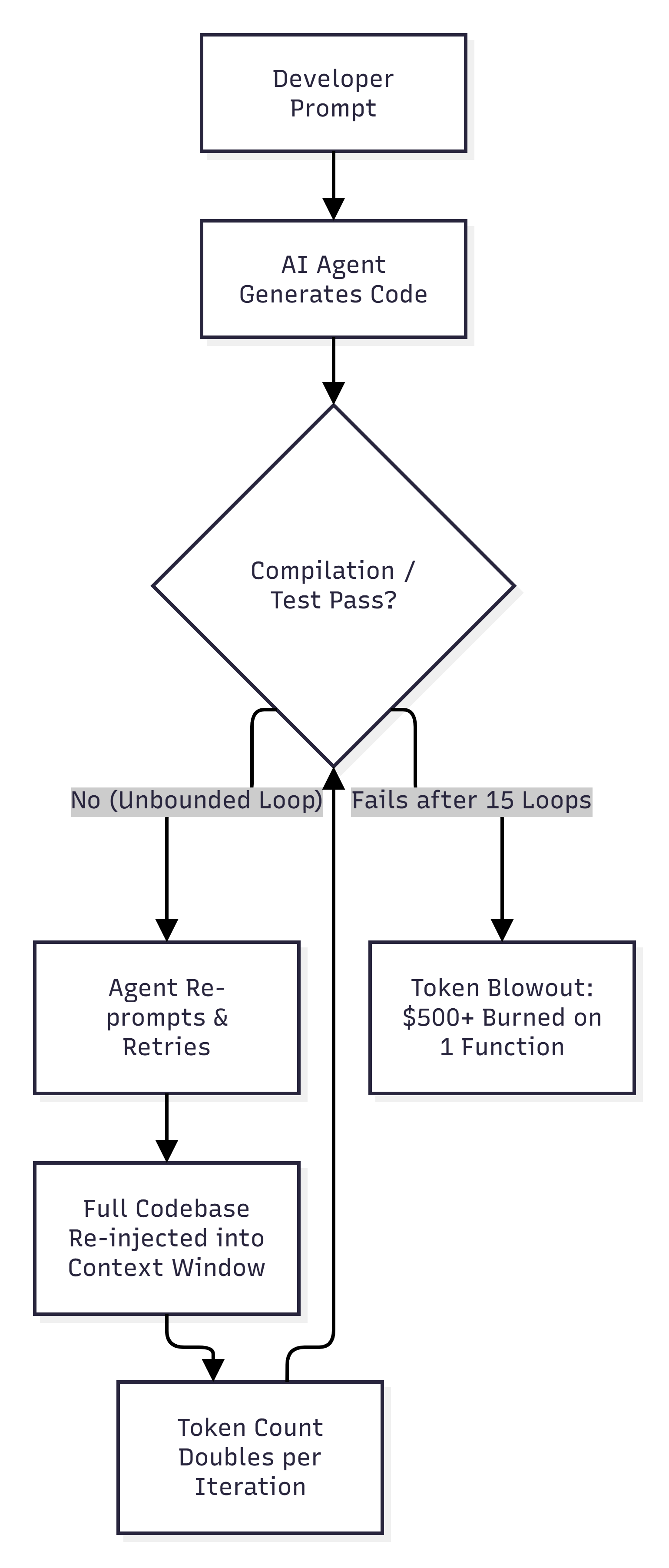
- Context Window Bloat: As codebases grow, sending full file histories back and forth to LLM endpoints consumes millions of input/output tokens per session.
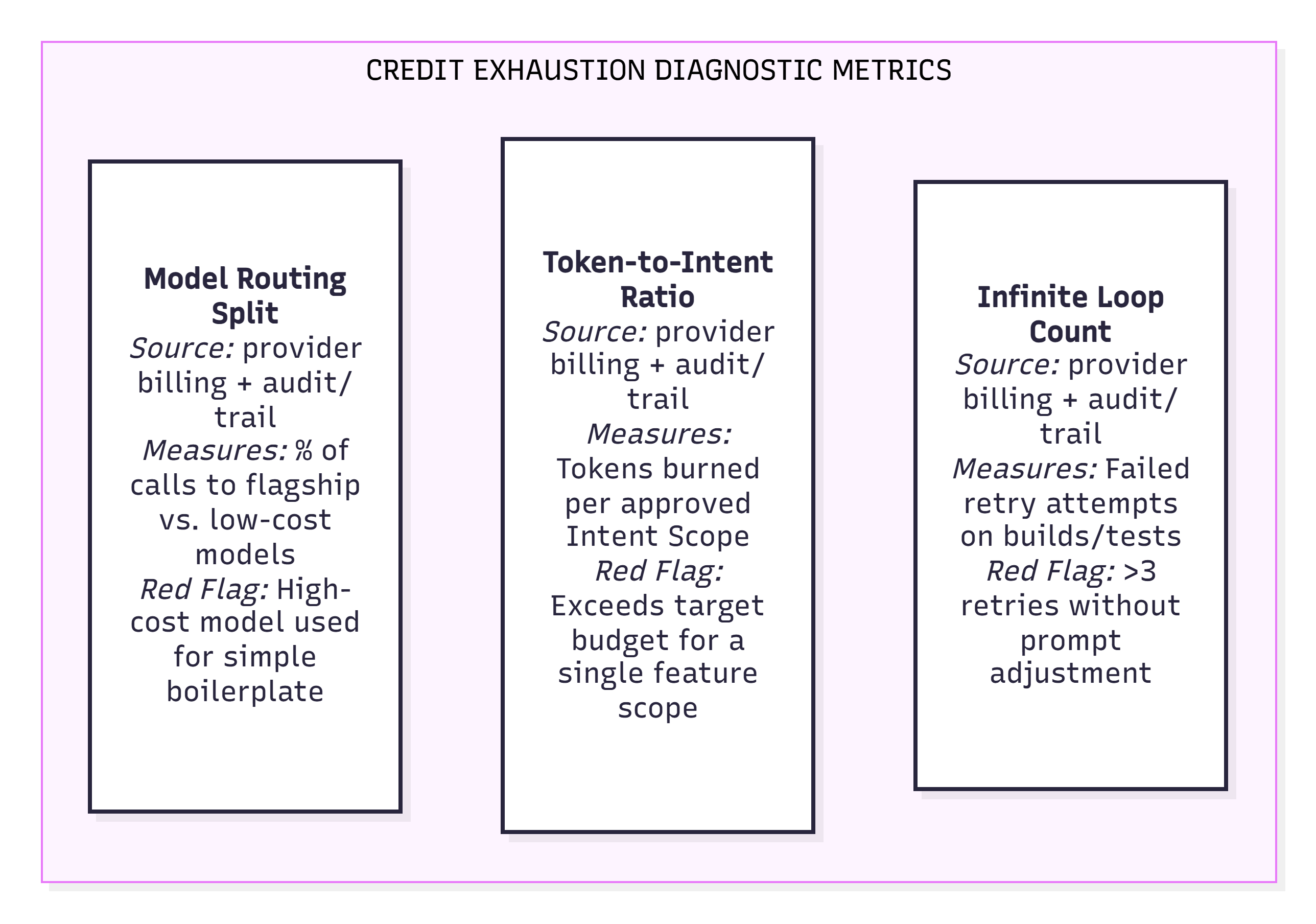
- Unbounded Retry Loops: When an agent attempts to fix a test failure without circuit breakers, it can spend hundreds of dollars in automated loops overnight without human awareness.
- Redundant Model Routing: Developers default to flagship, high-cost models for routine boilerplate tasks that cost-optimized or open-weight models could execute at a fraction of the cost.
Diagnosing Developer Credit Exhaustion ("My Credits Are Over")
When a developer requests a credit increase, it indicates an operational FinOps failure rather than insufficient budget. Before approving additional tokens, review the intent's audit trail (the audit/ folder under aidlc/spaces/<space>/intents/<YYMMDD>-<label>/) together with your provider's usage and billing data against the three core metrics below:
Quality Control: Scaling Impact with Lean, Senior Teams
Throwing more junior developers at AI-generated code creates validation fatigue and escalates risk. The objective of enterprise AI transformation is team compression and talent elevation: operating with fewer, highly skilled engineers who act as enterprise architects and system validators rather than code typists.
- Developer Control via Constraints: ADLC tracks workflow progress in
aidlc-state.mdand stops at approval gates, so each piece of work is scoped and reviewed before the next stage starts. - Audit-Defensible Sign-offs: No agent-generated code moves from Inception to Construction without explicit human sign-off on the execution plan at the approval gate.
2. Complete End-to-End Data Flows
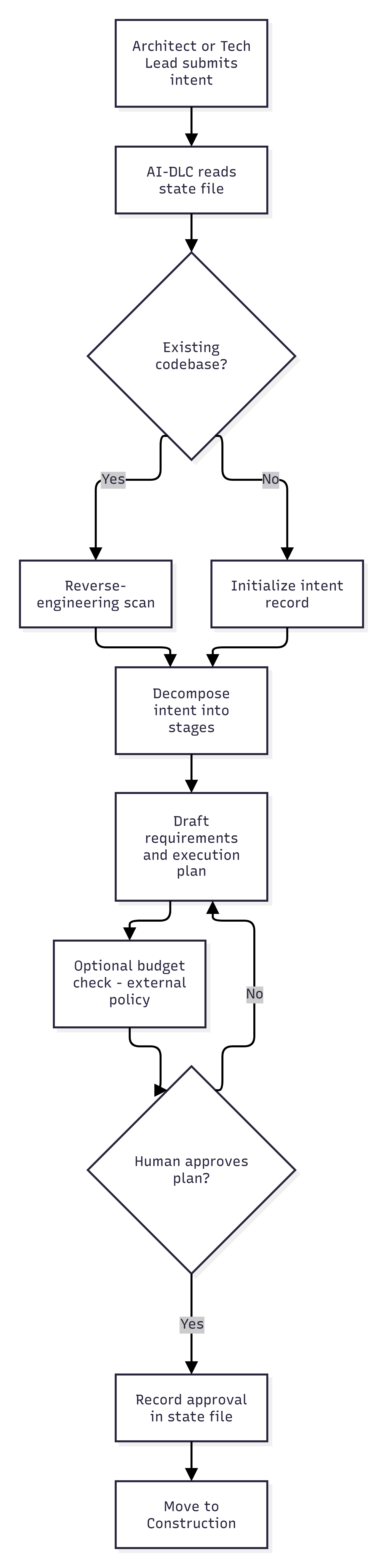
Flow A: Strategic Inception & Human Approval Gate
This flow governs intent intake, reverse engineering (if brownfield), work decomposition, and the mandatory human approval gate (typically an architect or tech lead; AI-DLC does not mandate a C-suite approver).
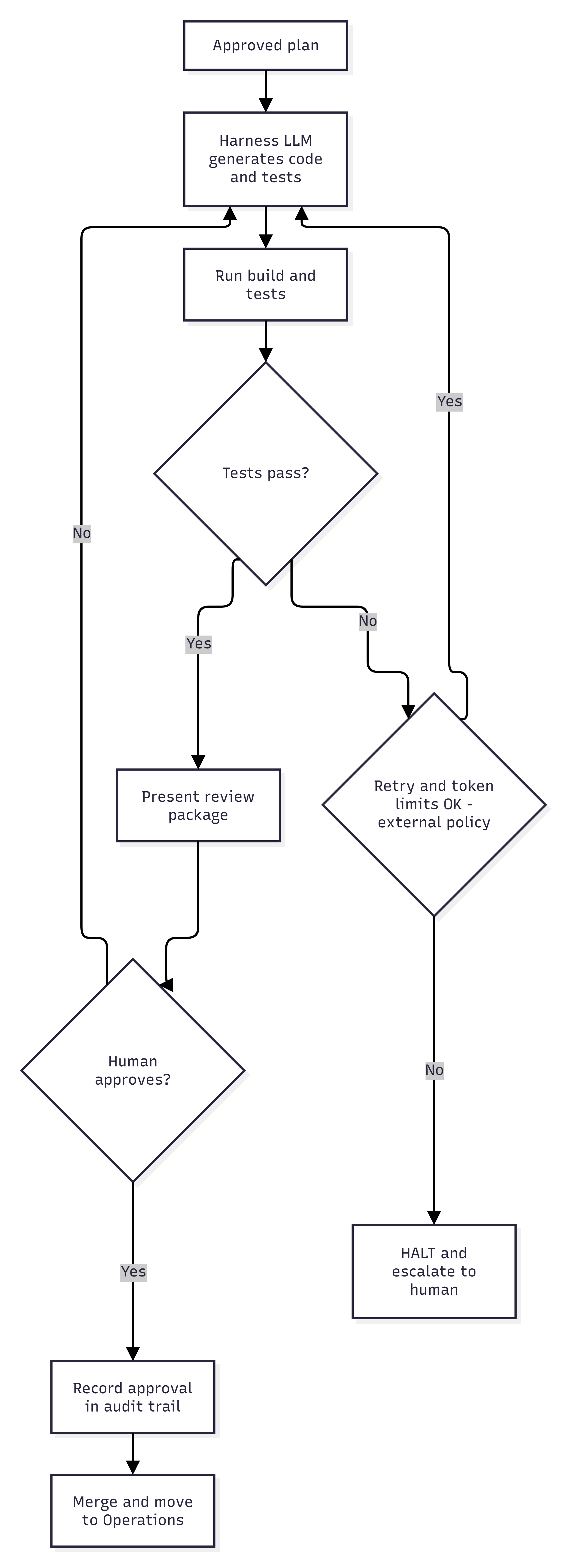
Flow B: Construction Phase & Recommended Cost Guardrails
This flow illustrates the construction cycle, automated build-and-test evaluations, recommended token-budget circuit breakers (configured outside AI-DLC), and quality verification.
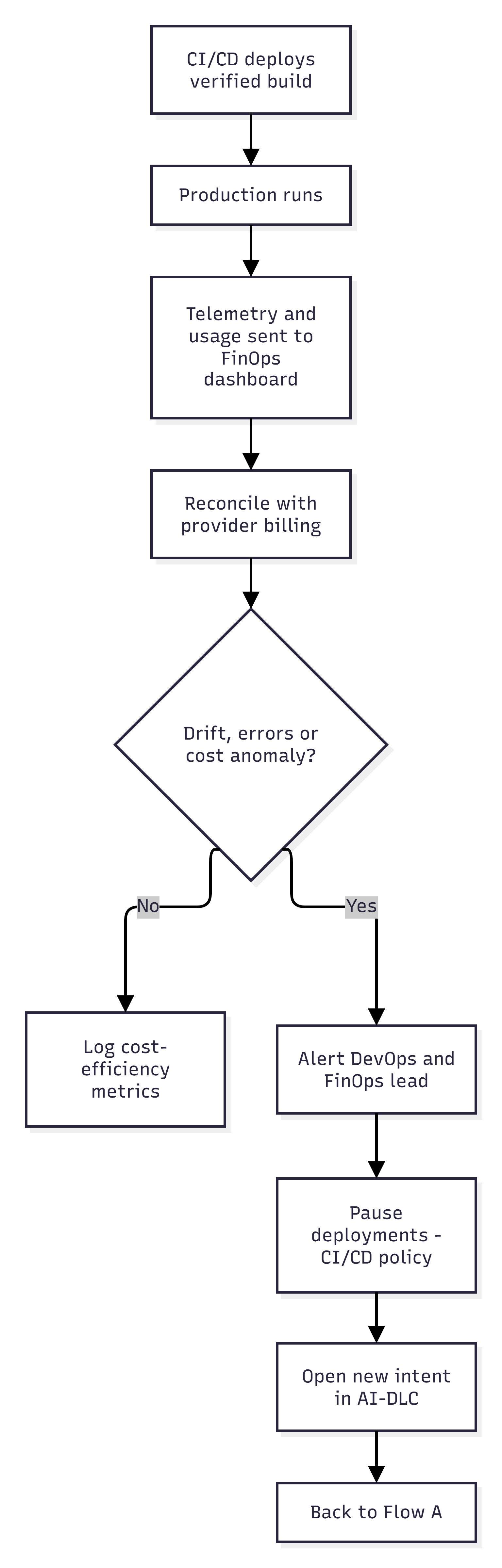
Flow C: Operational Governance & Telemetry Feedback Loop
This flow tracks deployment, operational telemetry, cost reconciliation (using your provider billing data), and feedback loops into future enterprise intents.
3. Landscape Analysis: Enterprise Frameworks & Alternatives
While AI-DLC offers a harness-neutral process wrapper, enterprise leaders must evaluate how it compares with other leading agentic frameworks across the engineering ecosystem:
4. Executive Matrix: Common Failure Modes & Structural ADLC Fixes
5. Implementation Playbook for CTAIOs & Engineering Leaders
Step 1: Install the Enterprise CLI Core
Deploy the lightweight binary across developer environments:
# macOS / Linux / WSL Native Installation
curl -fsSL https://github.com/awslabs/aidlc-workflows/releases/latest/download/install.sh | sh

# Windows Environment (PowerShell)
irm https://github.com/awslabs/aidlc-workflows/releases/latest/download/install.ps1 | iex
Run the installer from a normal (non-administrator) PowerShell window; the installer warns against admin installs.
Step 2: Bind Your AI Harness & Verify the Install
Configure AI-DLC for your organization's IDE or CLI harness. Model and provider access is handled by the harness, not by AI-DLC.
cd /path/to/enterprise-repository

# Bind harness engine
aidlc config --harness claude

# Run diagnostic verification
aidlc doctor
Step 3: Enforce Execution Governance
Open your configured harness (for example Claude Code) and start a governed intent. AI-DLC creates the governance artifacts (state, plans, audit trail) under aidlc/, and you should commit them to version control:
# Launch governed intent workflow
/aidlc Implement an automated claim reconciliation API with strict rate limiting and audit logging.
Generated Enterprise Artifact Structure
Governance records are kept under the aidlc/ folder:
enterprise-repo/
├── aidlc/spaces/default/intents/<YYMMDD>-<label>/
│   ├── aidlc-state.md     # Workflow progress for the intent
│   ├── inception/ ...     # Plans, including execution-plan
│   ├── construction/ ...
│   ├── build-and-test/    # Test evidence
│   └── audit/             # Committed audit shards
├── .aidlc-engine/         # Framework working files
├── src/
└── tests/
6. Strategic Conclusion
Managing AI-driven development is not a code generation problem—it is a governance and unit economics problem. While frameworks like LangGraph, CrewAI, Microsoft Agent Framework, and LlamaIndex provide specialized multi-agent and data capabilities, adopting ADLC (AI-DLC) gives enterprise leaders a harness-neutral operating strategy.
Through explicit Human-in-the-Loop approval gates and a committed audit trail, plus budget limits and retry caps set in your own tooling, organizations can scale software delivery velocity while keeping strong control over architecture, security, and cost.
Comments
Join the discussionStart with a one-week pilot on a single workflow and log total model spend, retry count, reviewer minutes, and whether the change actually passed acceptance checks. Put the spend and retry limits in the execution layer, not just in the prompt, and require a human decision before either limit is raised. For finance reporting, separate cost per attempted task from cost per accepted outcome; cheap generations can still create an expensive review queue. Compare those numbers with the manual baseline before expanding the pilot, and keep a rollback owner named in the execution plan.